


One Year Later :: The Anniversary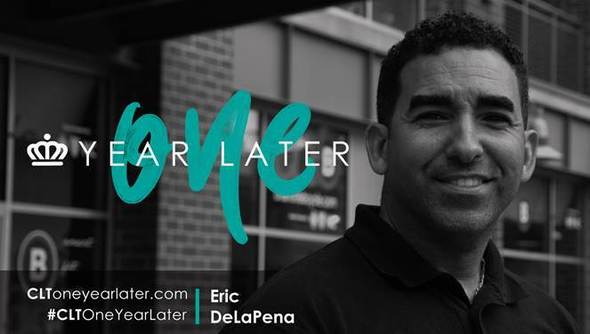
City of Charlotte Solid Waste Services' Field Operations Supervisor Eric DeLaPena.
A year ago today, Charlotte was making national headlines. The shooting death of Keith Lamont Scott caused outrage amongst Charlotte residents. Left with more questions than answers, protesters took to city streets to ensure that their voices were heard. Hundreds of people gathered in uptown Charlotte. Scenes of shattered glass, gravity covered buildings and trash littered streets could be seen on every news outlet. But, thanks to the Central Business District Field Operations Supervisor, Eric DeLaPena and his Special Services team, every morning after a night of protest Charlotte looked like a brand new city. Eric DeLaPena's StoryPicture uptown Charlotte. What do you see? It might be tree-lined, clean sidewalks. People bustle from building to building passing landmarks and decorative signs. Others sit on benches or stand under bus shelters waiting for the next bus. A passerby tosses a food wrapper into a nearby trash can. Cars dance to the timing of the stoplights. The city lives. What you might not notice – the uniformed person removing trash to keep the city clean. Eric DeLePena is the Field Operations Supervisor for the Central Business District for the city’s Solid Waste Services. His crews maintain the Tryon Street area and perform litter control and street sweeping to areas within the I-277 loop and all of the light rail stations. He takes pride in how the city looks. Eric’s story takes us back to Sept. 20 of last year. When events started to unfold that evening, his department was already preparing for if activities moved from north Charlotte to uptown. “Once I heard that there may be issues uptown, I began planning different crews and work schedules,” he said. “I was responsible for the coordination of crews and my crews were used largely because of their knowledge of the uptown area.” “I tried to think outside the box because I didn’t know exactly what was going to happen. We had pressure washing crews, litter control crews, graffiti removal crews, and we were ready to alter their job duties as needed. I made sure they had everything they needed, such as pans and brooms and graffiti removal tools.” The protests moved into uptown on the night of Sept. 21. “I personally didn’t stop working. My shift was overnight because that’s where I could be most useful. That’s when most of the cleaning needed to be done.” There was damage various places uptown including graffiti, litter and damage to trashcans. “I was chiefly concerned about the litter, damage to benches and my garbage cans. There was a lot of graffiti uptown and it was my job to make sure it was taken down as quickly as possible. My core responsibility was making sure that everything looked like it did the day before. I just wanted to make sure I fulfilled my job duty by making sure everything stayed pristine Uptown.” Cleaning wasn’t easy, but the crews were able to come in after protesters left the area. When Charlotte awakened the next day, the city was clean again. To the wondering eye, it was almost as nothing happened, outside of a few boarded buildings where glass had fallen the night before. The Solid Waste Services crews cleaned the area in a matter of hours. The crews continued to work 12-hour shifts throughout the week as activity continued in Uptown. While physical damage was erased, for Eric and many others, the events are never forgotten. Eric also shared his personal commitment to keep Uptown clean and make Charlotte a better home for everyone. A year later, he recognizes there’s still room for improvement. He pointed out Charlotte can work on its public transportation and providing access to all parts of Charlotte. He credited Charlotte Area Transit System (CATS) for its light rail and bus routes, but more should be done to get people where they need to go. “I think Charlotte was a great place to live before and I think it’s still a great place to live.” About One Year LaterCharlotte, One Year Later is our opportunity to reflect on the collective events that led to where we are today, and renew the community’s shared commitment to bring about positive change for our city. The Charlotte, One Year Later effort is neither the beginning nor the end of the healing process for our city. This work is the recognition of the progress made to date, and an acknowledgement of the difficult road ahead to address the city’s challenges. Check back weekly for more stories or submit your own. |
