


Fourth of July Collection Schedule
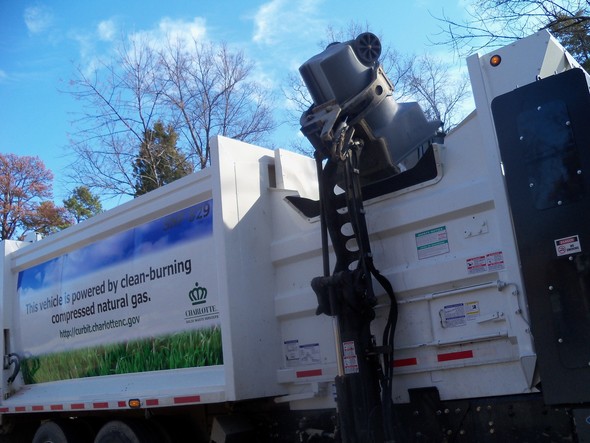
City of Charlotte Solid Waste Services will collect garbage, recycling, yard waste and bulky items on Wednesday, July 4, 2018.
How to Prepare For Collection ::
- Do not overfill carts or place items outside of the cart. Items outside the rollout carts will not be collected.
- Please ensure that the lid on your garbage and recycling rollout carts are down.
- Please place the cart within six feet of the curb and with the handle facing toward your property. Do not block the sidewalk.
- Please allow three feet of space between collection items and other obstacles such as mailboxes, phone poles and vehicles.
- Place the cart at the curb no later than 6:00 am on your scheduled collection day.
- Place the cart at the curb no sooner than the day before collection. The cart must be removed from the curb by midnight on the day of collection. A minimum $150 citation may be issued if you place the cart at the curb sooner than the day before collection or leave it at the curb past midnight on your collection day.
- All recyclables should be loose in the cart. Recyclables should not be bagged.
- Plastic bags aren't accepted and should be recycled at local grocery store. Styrofoam and plastic plates and cups should be thrown in the garbage.
- For yard waste and bulky waste preparation tips visit our item preparation quick tips page.
Solid Waste Services Qualifies for Nationals in the Garbage Truck Rodeo
On May 19, City of Charlotte Solid Waste Services drivers Richard Greene, Frank Houser, Brent Koch, Xavier McConneyhead and Ryan Phillips competed to be named the best garbage truck driver in North Carolina. Months of practice definitely paid off at this year’s North Carolina Regional Solid Waste Association of North America’s (SWANA) Truck and Equipment Road-E-O.
The drivers traveled to Raleigh, NC and drove through several challenging obstacle courses hoping to score high. Drivers had to squeeze their trucks between metal barrels, back through rows of plastic cones and avoid crushing tennis balls. Before the driving portion, participants had to to take a written test that included a pre and post trip examination. Both the written and driving tests simulated what drivers encounter on a daily basis while in the field. On their routes, drivers must maneuver tight spaces, back up through cluttered construction sites, and watch for small children on bicycles.
Ryan Phillips, won third place in the rear loader category. Frank Houser, placed second in the automation category, sending Solid Waste to the nationals in September, which will take place in Denver, Colorado.
Winners received cash prizes and a trophy to commemorate their hard work. All the drivers did a wonderful job and Solid Waste Services is proud to have them on the team.
National Garbage Man Day Week of June 17
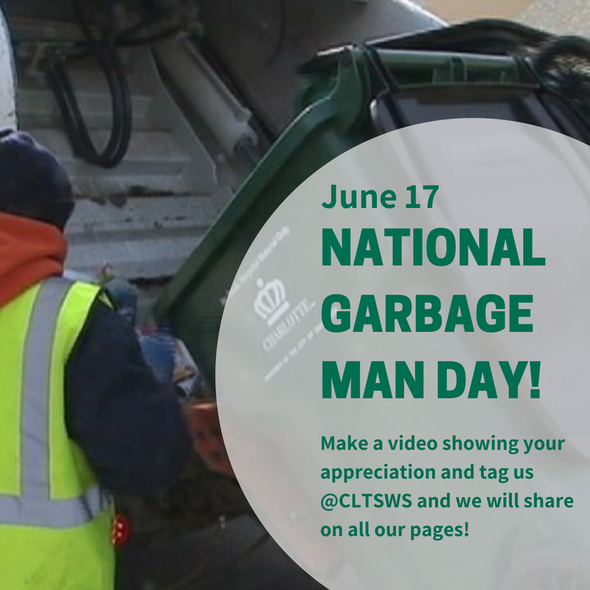
Don’t you love your local garbage truck crew? In preparation for their appreciation day, we’re asking you to send in videos of your kids showing them a little love for everything they do. We ask that you post these videos on your social media accounts to thank them for all their hard work this year. Tag us @CLTSWS on Facebook, Instagram and Twitter and we will share on our pages.
Nine Healthy and Environment Friendly Grilling Tips
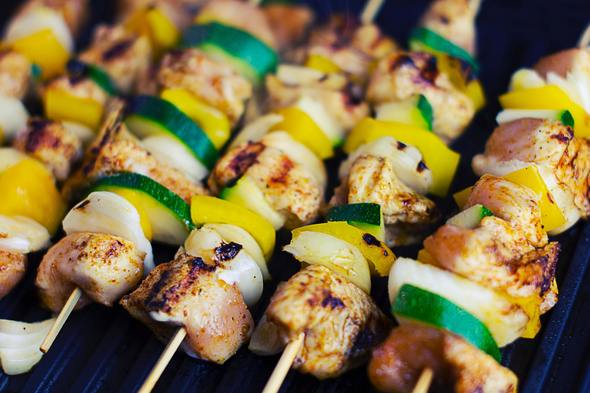
- Include more fruits veggies in your summer cookout menu. Adding more fruits and veggies to your menu reduces the amount of trash because fresh fruits and veggies generally come without packaging (that means you have to leave the plastic baggies at the store). Additionally, the unused portions of the fruits and veggies can be composted, which is an added benefit for the environment.
- Avoid burning your meats. Meat grilling makes two composites associated with cancer. Higher heats produce heterocyclic amines (HCA) as they’re cooked and polycyclic aromatic hydrocarbons (PAH) when the juices drip onto the coal causing the fire to intensify. In order to avoid these composites, trim excess fats from your meats or precook some meats in heat where no fire is involved.
- Marinate your meat with lemon juice. Using lemon juice to marinate meats hinders the polycyclic aromatic hydrocarbons PAH compound in meat, which will help prevent the cancerous causing smoke.
- Use gas instead of charcoal. Charcoal has a very high carbon footprint making it more environmentally detrimental than gas grills. If you have to use charcoal, use US made charcoal. US made charcoal is better than Brazilian made charcoal because our forests are healthier. When closed in an airtight, insulated grill it puts off less carbon. [What does this mean? It doesn't make sense.]
- Buy grass-fed meats. Grass-fed animals are often eating from healthier soil and less likely to be affected by water pollution. You can find environmentally friendlier meat options at many local grocery stores.
- Check the temperature of the grill. When using grass-fed meats, checking the meat's temperature is a necessity. It helps to prevent the meat from getting dried out.
- Grill more meat at one time. When grilling meats like chicken, it is important to grill the whole bird so there are more options available to eat it without waste.
- Clean your grill thoroughly. Keeping the grill clean with a grill bush will help avoid fire flair ups and cross contamination. When you keep the same grill without cleaning it the toxins can be transferred onto the new meats, which will already be producing their own toxins.
- Invest in a grill grate. Grill grates sit on the top of your grill, spreading the heat, reducing required fuel and reducing fire flare ups, which is important to help reduce toxins.
